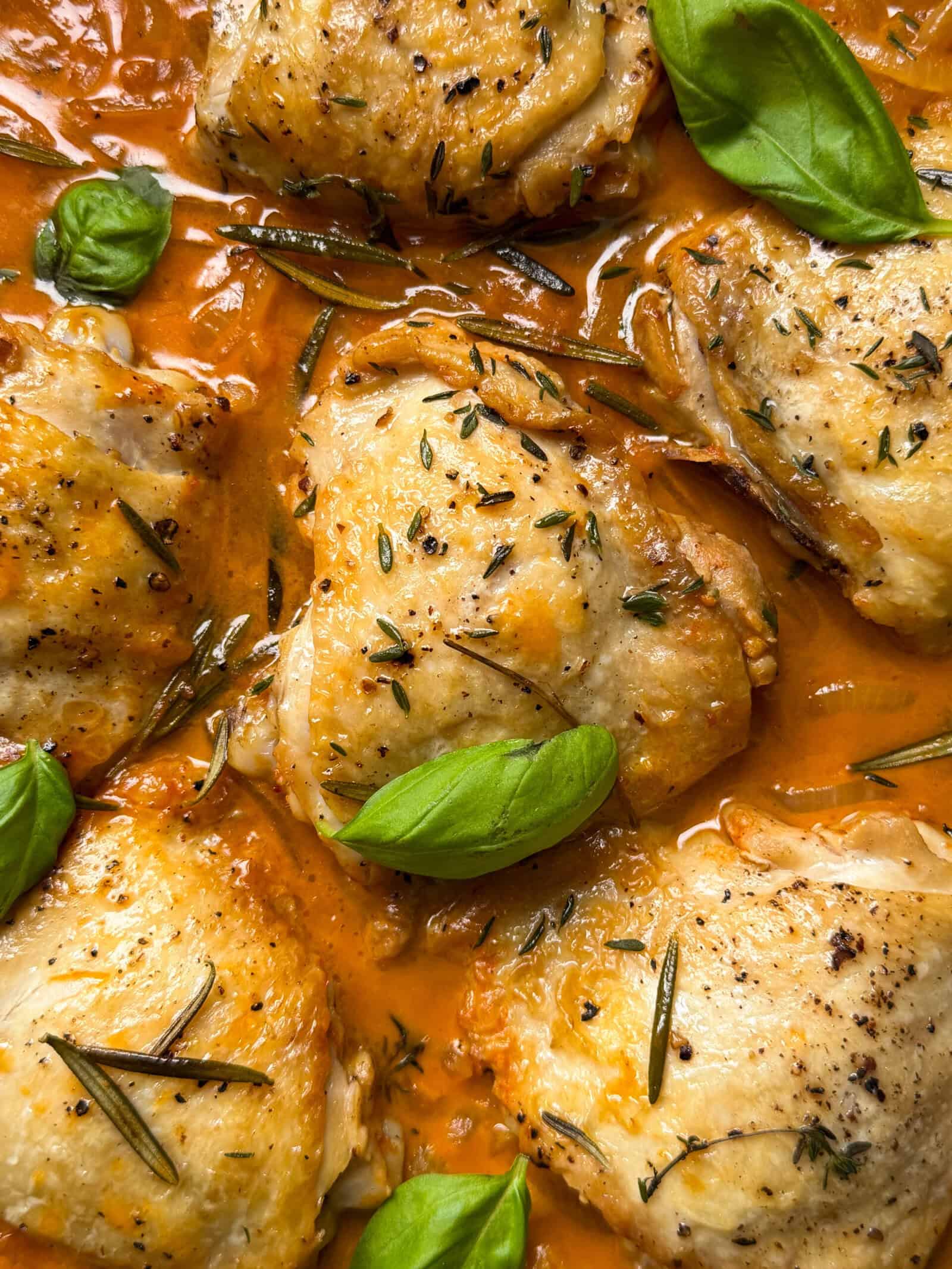
Chicken and Onions doesn’t sound like much on paper, but this is one of those recipes where the simplicity is the best part. Bone-in thighs get seared until the skin is golden, then they braise low and slow in white wine, chicken broth, and a mountain of onions that cook all the way down until they’re sweet and caramelized. Fresh sage, rosemary, and thyme go in right before the lid does, and by the time it’s done, the whole pan smells incredible and the sauce has reduced down to a deeply savory, glossy pan sauce you’ll want spooned over everything on your plate.
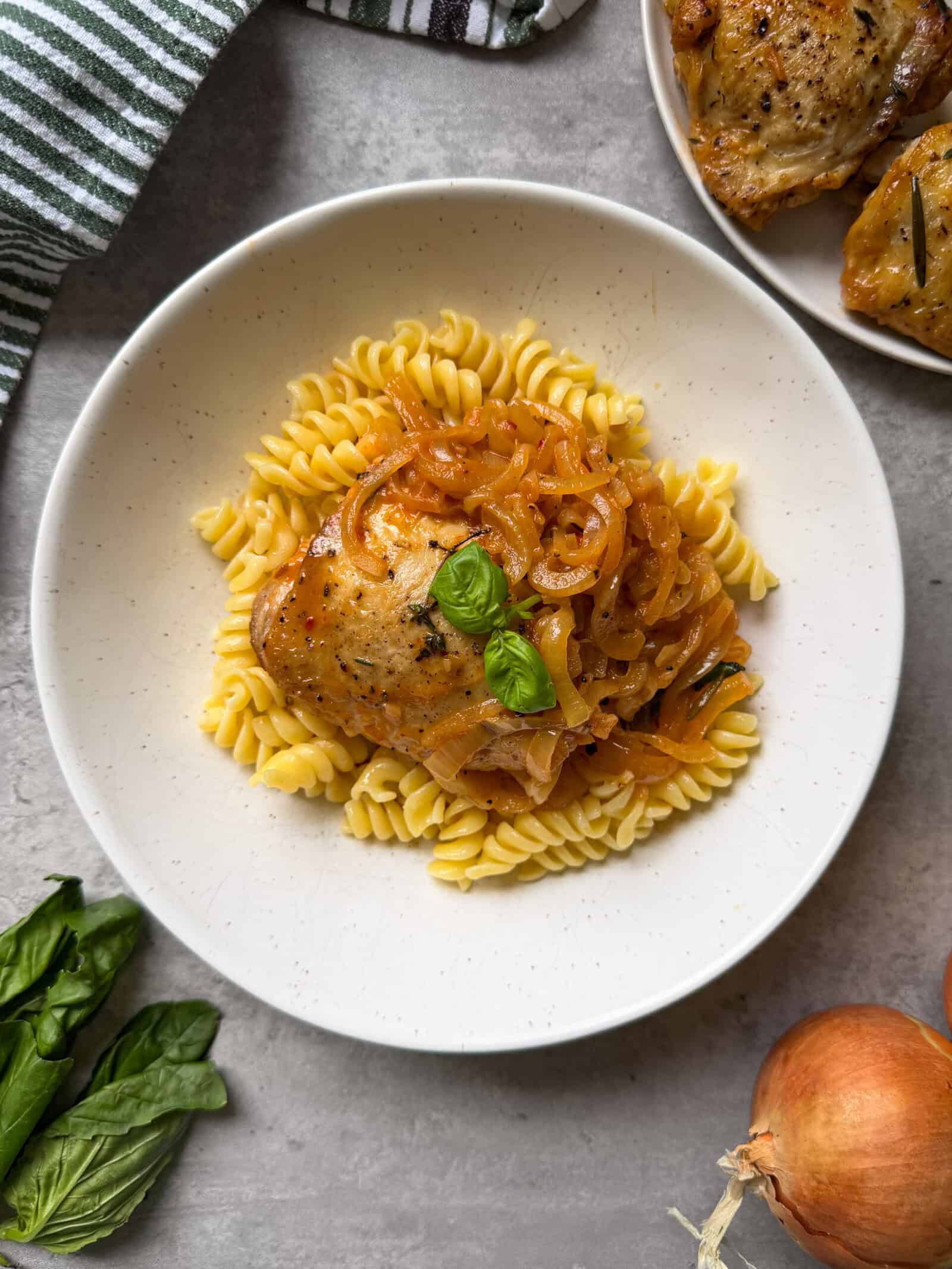
This chicken and onions recipe is one I come back to when I want a real dinner without a lot of cleanup or complicated steps. Everything happens in one skillet, the ingredient list is short, and it works over pasta, mashed potatoes, rice, or just with good bread on the side to soak up the sauce. It also reheats great, which makes it a solid choice for meal prep or a next-day lunch. Want more easy chicken dinners? Try my Lemon Chicken Orzo or my Blackened Chicken Alfredo.
😍 Why You’ll Love This Chicken and Onions Recipe
Layered flavor from simple ingredients: slow-softened onions, white wine, tomato paste, and fresh herbs build a sauce that tastes like it simmered all afternoon.
One pan start to finish: everything happens in the same skillet.
That sauce: the wine, broth, tomato paste, and jammy onions reduce into something deeply savory that you’ll want to mop up with bread.
Works with whatever you’re serving: pasta, rice, potatoes, polenta, the sauce plays well with all of it.
🍗 Ingredients You’ll Need to Make Chicken and Onions
Olive oil: for searing the chicken and starting the onions.
Bone-in, skin-on chicken thighs: the skin crisps up during the sear and the bone keeps the meat juicy through the braise.
Yellow onions: three cups cooks way down until sweet and jammy.
Chicken broth: the liquid base of the sauce—use a salted one you actually like the taste of.
Tomato paste: just a tablespoon is all you need, but it adds color, depth, and a subtle richness that pulls everything together.
White wine: a dry Chardonnay works great. It lifts the browned bits off the pan and keeps the sauce from feeling heavy.
Garlic: garlic softens into the onions and rounding out the base of the sauce.
Red pepper flakes: optional, but a small pinch balances the sweetness of the onions nicely.
Fresh sage: scattered over the chicken right before the lid goes on; it perfumes the whole dish as it braises and adds an earthiness that works really well with the onions.
Fresh thyme: a small handful tucked in with the chicken adds a herby warmth that runs through the whole sauce.
Fresh rosemary: just a few sprigs go a long way here. It’s aromatic and slightly piney, and it pairs really well with the wine and broth base.
✔ How To Make Chicken and Onions
Pat the chicken dry and season both sides generously with salt and pepper. Peel and thinly slice the onions. Set aside.
Heat olive oil in a large skillet over medium-high heat. Add the chicken and sear for 3 – 4 minutes per side, until golden brown. (It does not need to be fully cooked at this stage.) Remove from the pan and set aside.
Reduce heat to medium-low. Add the sliced onions and garlic to the same pan and season with salt, pepper, and red pepper flakes. Sauté for about 5 minutes, stirring occasionally, until softened and translucent.
Stir in the tomato paste and cook for 1–2 minutes, allowing it to coat the onions. Pour in the white wine, scraping up any browned bits from the bottom of the pan. Let simmer for about 1–2 minutes, until slightly reduced.
Pour in the chicken broth and stir to combine. Nestle the chicken back into the pan along with any juices. Scatter the fresh herbs over top of the chicken thighs.
Cover and cook on low heat for 15–20 minutes, or until the chicken is fully cooked and reaches an internal temperature of 165°F.
Serve warm with pasta, rice, potatoes, or crusty bread to soak up the sauce.
🗒 Variations
Add mushrooms: cremini or portobello sliced thin and cooked down with the onions soak up the sauce and add a lot of body to the dish.
Turn it into a full one-pan meal: toss cooked pasta or egg noodles directly into the skillet at the end and let everything come together before serving.
Mix up the onions: a combination of yellow onions and shallots gives the base a slightly more delicate, complex flavor.
🗒 Substitutions
Chicken thighs: boneless thighs work if that’s what you have—just reduce the cook time slightly and check the internal temp early.
White wine: skip it and add a bit more broth plus a small squeeze of lemon juice at the end to keep some brightness in the sauce.
🍴 Leftovers? Lucky you.
Store leftovers in an airtight container in the fridge for up to three days. Reheat in a covered skillet over low heat with a small splash of broth to loosen the sauce, or microwave in 45-second intervals, stirring in between.
🤔 FAQs
Can I use boneless, skinless chicken thighs?
Yes, boneless thighs work fine here. They’ll cook faster, so start checking around the 12-minute mark. The skin won’t be a factor, but the sauce and onions carry the dish either way.
Can I use chicken breasts instead?
You can, but breasts dry out faster than thighs so keep a close eye on them. Pull them as soon as they hit 165°F and don’t let them sit in the heat too long after that.
Can I make this chicken and onions recipe without wine?
Yes — just replace it with an equal amount of extra chicken broth and add a small squeeze of lemon juice at the end to bring some brightness back into the sauce.
Can I make this ahead of time?
This reheats really well, so it’s a great make-ahead meal. Cook it fully, let it cool, and store it covered in the fridge for up to three days. Reheat low and slow with a splash of broth to loosen the sauce.
How do I know when the chicken is done?
The most reliable way is a meat thermometer—you’re looking for 165°F at the thickest part of the thigh, away from the bone. The meat should also pull away from the bone easily when it’s ready.
👩🏻🍳 Hungry For More?
If you loved these chicken and onions, then make sure to check out a few of my other healthy chicken dinners you may also love:
- Honey Mustard Chicken
- Lemon Chicken Orzo
- Chicken Poblano Soup
- Best Chicken Marinade
- Yogurt Marinated Chicken
💌 Let’s Stay Connected
Keep in touch with me on Instagram, TikTok, Facebook, and Pinterest! If you do make this Chicken and Onions recipe (or any recipe of mine) don’t forget to leave a review.
Chicken and Onions
Equipment
- 1 large frying pan with lid
Ingredients
- 2 tbsp olive oil
- 6 chicken thighs , bone in and skin on
- 3 cups yellow onions, sliced
- 1 cup chicken broth, salted
- 1 tbsp tomato paste
- 1/2 cup white wine, Chardonnay
- 3 garlic cloves, minced
- 1/4 tsp red pepper flakes, optional
- 1 small handful fresh sage
- 1 small handful fresh thyme
- 1 small handful fresh rosemary
- salt and pepper, to taste
Instructions
- Pat the chicken dry and season both sides generously with salt and pepper.
- Peel and thinly slice the onions. Set aside.
- Heat olive oil in a large skillet over medium-high heat.Add the chicken and sear for 3 – 4 minutes per side, until golden brown. (It does not need to be fully cooked at this stage.)Remove from the pan and set aside.
- Reduce heat to medium-low. Add the sliced onions and garlic to the same pan and season with salt, pepper, and red pepper flakes. Sauté for about 5 minutes, stirring occasionally, until softened and translucent.
- Stir in the tomato paste and cook for 1–2 minutes, allowing it to coat the onions.
- Pour in the white wine, scraping up any browned bits from the bottom of the pan. Let simmer for about 1–2 minutes, until slightly reduced.
- Pour in the chicken broth and stir to combine. Nestle the chicken back into the pan along with any juices. Scatter the fresh herbs over top of the chicken thighs.
- Cover and cook on low heat for 15–20 minutes, or until the chicken is fully cooked and reaches an internal temperature of 165°F.
- Serve warm with pasta, rice, potatoes, or crusty bread to soak up the sauce.
Nutrition
Nutrition information is automatically calculated, so should only be used as an approximation.